
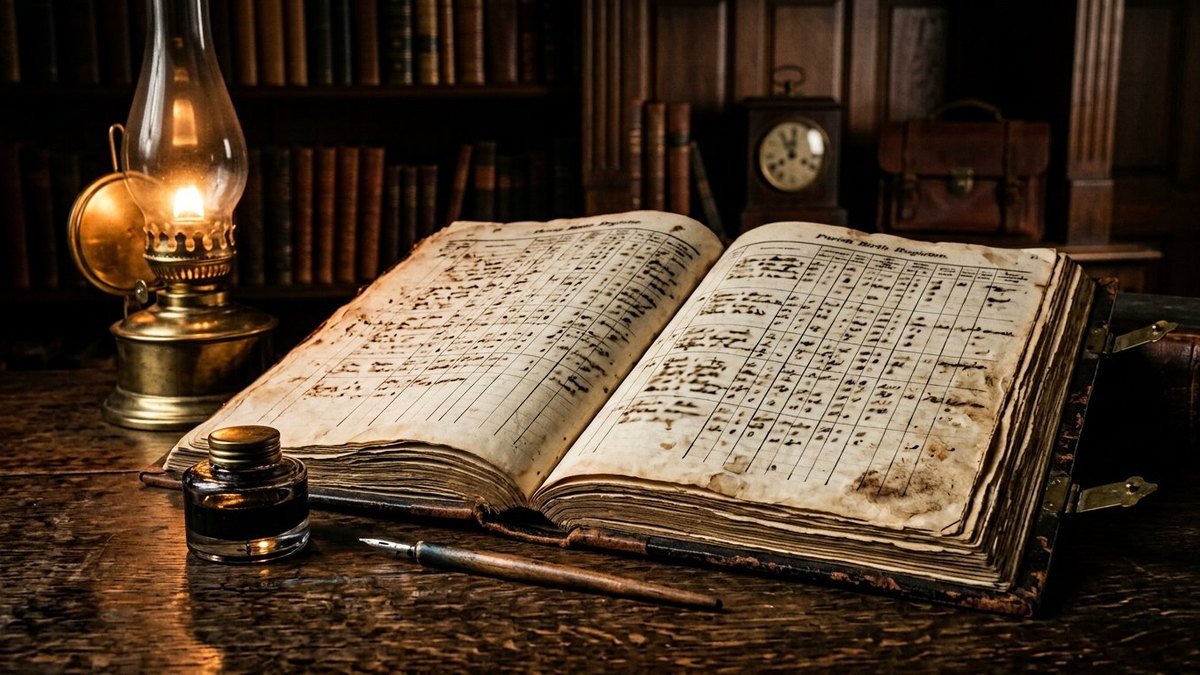
Here is something most Victorian name lists get wrong: Victoria was not a popular Victorian name.
In 1844, English birth registers recorded over 63,000 girls named Nancy. Victoria got 148. The Queen’s name was considered too grand for ordinary families — so while Albert climbed steadily after the royal wedding in 1840, Victoria never did.
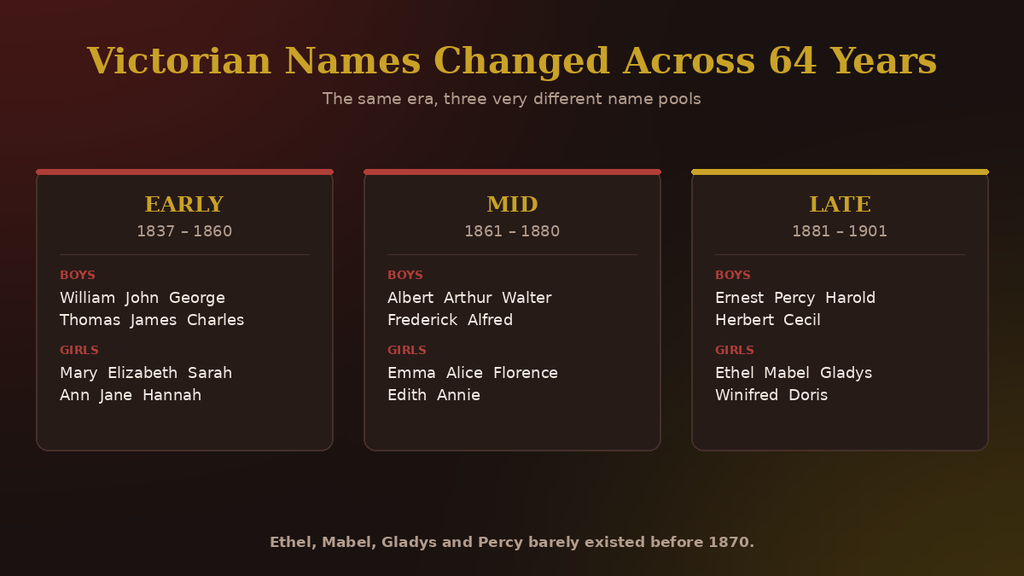
That is the kind of detail that separates a real Victorian name from a name that merely sounds old. The Victorian era ran from 1837 to 1901, which is sixty-four years — long enough that a boy christened at the start and a boy christened at the end came from noticeably different name pools. And because Victoria was Queen of Britain, the registers that matter are English ones, not American ones.
Below are 300 names drawn from that period, sorted by boys, girls, surnames, era, class and a few categories nobody else bothers with — plus a generator that builds them for you.
Victorian Name Generator
The Victorian name generator below works in three time bands, because a name that was common in 1840 was not necessarily common in 1895. Early Victorian runs 1837 to 1860, mid-Victorian covers 1861 to 1880, and late Victorian takes you to 1901. Leave it on Any Victorian Year and it draws from all sixty-four years at once.
You can generate male first names, female first names, surnames on their own, or complete full names with a surname attached. Every result is labelled with the period it belongs to, so you are never guessing whether a name fits your story’s decade. The surnames come from occupational and locational English roots, which means this doubles as a 1800s name generator for Gilded Age characters, though the given names lean British. Tap any name to copy it.
Victorian Name Generator
Choose a period and a type, then generate. Names are drawn from English registers of 1837–1901. Tap any result to copy it.
Victorian Boy Names
Victorian boys’ names were dominated by four: William, John, George and Thomas held the top spots for most of the reign. What changed was the tier just underneath. Early on it was Henry, Charles and Joseph. By the 1880s, Arthur, Ernest, Herbert and Percy had pushed their way in — and Albert had risen sharply after Victoria married him in 1840.
| Name | Meaning |
|---|---|
| William | Germanic Willahelm — will, helmet |
| John | Hebrew — God is gracious |
| George | Greek — farmer, earth-worker |
| Thomas | Aramaic — twin |
| James | Hebrew — supplanter |
| Charles | Germanic — free man |
| Henry | Germanic Heinrich — home ruler |
| Albert | Germanic — noble and bright |
| Arthur | Celtic — bear, or stone |
| Frederick | Germanic — peaceful ruler |
| Edward | Old English — wealthy guardian |
| Joseph | Hebrew — he will add |
| Samuel | Hebrew — God has heard |
| Walter | Germanic — ruler of the army |
| Ernest | Germanic — serious, resolute |
| Herbert | Germanic — bright army |
| Percy | Norman French — from Perci |
| Harold | Old Norse — army ruler |
| Alfred | Old English — elf counsel |
| Reginald | Latin Reginaldus — ruler’s advisor |
| Horace | Latin Horatius — timekeeper |
| Cecil | Latin — blind, or sixth |
| Clement | Latin — merciful |
| Edmund | Old English — prosperous protector |
| Sidney | Old English — wide meadow |
| Wilfred | Old English — desiring peace |
| Leonard | Germanic — brave as a lion |
| Stanley | Old English — stony clearing |
| Ambrose | Greek — immortal |
| Bertram | Germanic — bright raven |
Victorian Girl Names
Mary and Elizabeth sat at the top of English registers for almost the entire period, with Sarah and Ann close behind. The interesting shift happens mid-reign: Florence, Edith and Alice climbed fast, and by the 1880s a distinctly late-Victorian cluster had appeared — Ethel, Mabel, Gertrude, Winifred — names that sound Victorian to us precisely because they barely existed before or after.
| Name | Meaning |
|---|---|
| Mary | Hebrew — bitter, or star of the sea |
| Elizabeth | Hebrew — God is my oath |
| Sarah | Hebrew — princess, noblewoman |
| Ann | Hebrew Hannah — grace, favour |
| Jane | Hebrew — God is gracious |
| Hannah | Hebrew — grace |
| Emma | Germanic — whole, universal |
| Alice | Germanic — of nobility |
| Florence | Latin — flourishing |
| Edith | Old English — prosperous in war |
| Ethel | Old English — noble |
| Mabel | Latin amabilis — loveable |
| Gertrude | Germanic — spear of strength |
| Winifred | Welsh — blessed peacemaking |
| Agnes | Greek — pure, chaste |
| Ellen | Greek Helen — bright, shining |
| Emily | Latin — rival, industrious |
| Harriet | Germanic — home ruler |
| Eliza | Hebrew — shortened Elizabeth |
| Martha | Aramaic — lady, mistress |
| Louisa | Germanic — famous warrior |
| Ada | Germanic — noble |
| Clara | Latin — bright, clear |
| Beatrice | Latin — she who brings happiness |
| Constance | Latin — steadfast |
| Charlotte | French — free woman |
| Lilian | Latin — lily |
| Isabella | Hebrew — pledged to God |
| Maud | Germanic — mighty in battle |
| Augusta | Latin — venerable, majestic |
Victorian Era Names by Period
This is the part most lists skip. Sixty-four years is two full generations, and the name pool shifted across them. If you are writing a character, the single most useful thing you can do is pick the right decade first.
| Name | Period and note |
|---|---|
| Susannah | Early (1837–60) — biblical, declining by 1870 |
| Matilda | Early — Norman revival name |
| Rebecca | Early — biblical, steady throughout |
| Caroline | Early — slightly grander choice |
| Esther | Early — biblical, common in 1840s registers |
| Phoebe | Early — biblical, faded by late reign |
| Amelia | Early — Germanic, early popularity |
| Maria | Early — Latin form of Mary, everywhere |
| Isaac | Early — biblical, strongly early Victorian |
| Abraham | Early — biblical, rare after 1870 |
| Louise | Mid (1861–80) — royal daughter |
| Helena | Mid — royal daughter |
| Leopold | Mid — royal son, never common |
| Annie | Mid — hugely common mid-reign |
| Owen | Mid — Welsh, spreading into England |
| Rosina | Mid — ornate, mid-Victorian taste |
| Selina | Mid — fashionable mid-reign |
| Jessie | Mid — Scottish, spread south |
| Kate | Mid — used as a full name, not a short form |
| Rosa | Mid — Latin floral, before the flower boom |
| Gladys | Late (1881–1901) — Welsh, spread rapidly |
| Doris | Late — just arriving as the era ended |
| Muriel | Late — Celtic revival |
| Olive | Late — plant name, late-Victorian |
| Hilda | Late — Anglo-Saxon revival |
| Phyllis | Late — Greek, fashionable by 1890 |
| Leslie | Late — Scottish surname used as given name |
| Vera | Late — Russian, arrived via fiction |
| Elsie | Late — Scottish, very late Victorian |
| Archibald | Late — aspirational, slightly grand |
Victorian Last Names
Victorian surnames were already fixed by this period, so these are inherited rather than invented. English surnames come from four sources: occupation, place, parentage, and nickname. Occupational surnames are the most useful for fiction because they tell you instantly what a family once did.
English surnames were already centuries old by 1837, which is why so many of them overlap with medieval names the occupations simply stopped existing while the names stayed.
| Surname | Origin |
|---|---|
| Thatcher | Occupational — roofer with reeds |
| Cooper | Occupational — barrel maker |
| Chandler | Occupational — candle maker |
| Fletcher | Occupational — arrow maker |
| Collier | Occupational — coal miner |
| Wainwright | Occupational — wagon builder |
| Sawyer | Occupational — cuts timber |
| Tanner | Occupational — leather worker |
| Mercer | Occupational — cloth merchant |
| Bailey | Occupational — bailiff |
| Chapman | Occupational — travelling trader |
| Fuller | Occupational — cleans cloth |
| Weaver | Occupational — loom worker |
| Mason | Occupational — stone worker |
| Cartwright | Occupational — cart builder |
| Ashworth | Place — ash tree enclosure |
| Thornbury | Place — thorn fortress |
| Whitfield | Place — white field |
| Pembroke | Place — Welsh headland |
| Hargrave | Place — grey grove |
| Ravenscroft | Place — raven’s field |
| Fairweather | Nickname — pleasant tempered |
| Armitage | Place — hermitage |
| Winterbourne | Place — seasonal stream |
| Blackwood | Place — dark forest |
| Hollingsworth | Place — holly enclosure |
| Wickham | Place — dwelling settlement |
| Pennington | Place — Penna’s farmstead |
| Rutherford | Place — cattle ford |
| Stanhope | Place — stony valley |
Working-Class Victorian Names
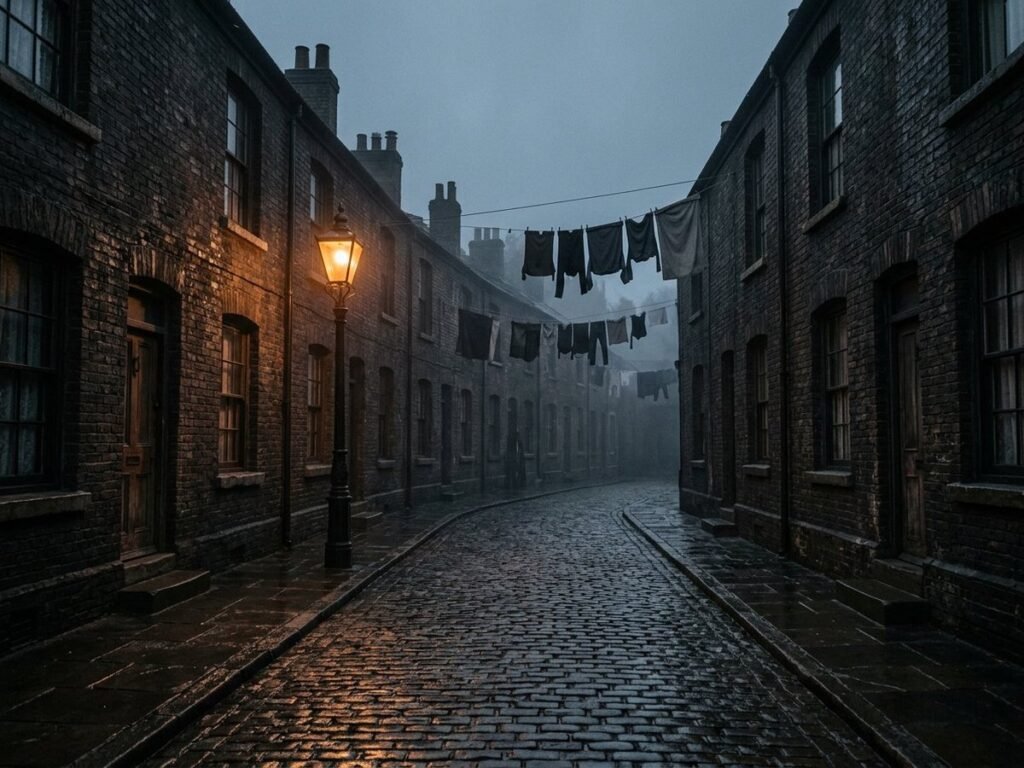
Class shaped Victorian naming more than any other factor. Working households chose short, plain, familiar names that got shortened almost immediately — a boy christened William was Bill by the time he could walk. These were names meant to be shouted across a yard, not engraved on a calling card.
| Name | Note |
|---|---|
| Bill | Everyday William |
| Tom | Everyday Thomas |
| Jack | Everyday John |
| Ned | Everyday Edward |
| Sam | Everyday Samuel |
| Joe | Everyday Joseph |
| Dick | Everyday Richard |
| Bert | Everyday Albert or Herbert |
| Alf | Everyday Alfred |
| Stan | Everyday Stanley |
| Polly | Everyday Mary |
| Nellie | Everyday Ellen or Helen |
| Betsy | Everyday Elizabeth |
| Sally | Everyday Sarah |
| Nancy | Everyday Ann |
| Kitty | Everyday Katherine |
| Peggy | Everyday Margaret |
| Lottie | Everyday Charlotte |
| Hattie | Everyday Harriet |
| Fanny | Everyday Frances |
| Patty | Everyday Martha |
| Biddy | Everyday Bridget |
| Winnie | Everyday Winifred |
| Maggie | Everyday Margaret |
| Jenny | Everyday Jane |
| Ruby | A plain jewel name, popular in terraces |
| Daisy | Flower name, widely used |
| Lily | Flower name, very common |
| Violet | Flower name, late Victorian |
| Ivy | Flower name, cheap and cheerful |
Upper-Class Victorian Names
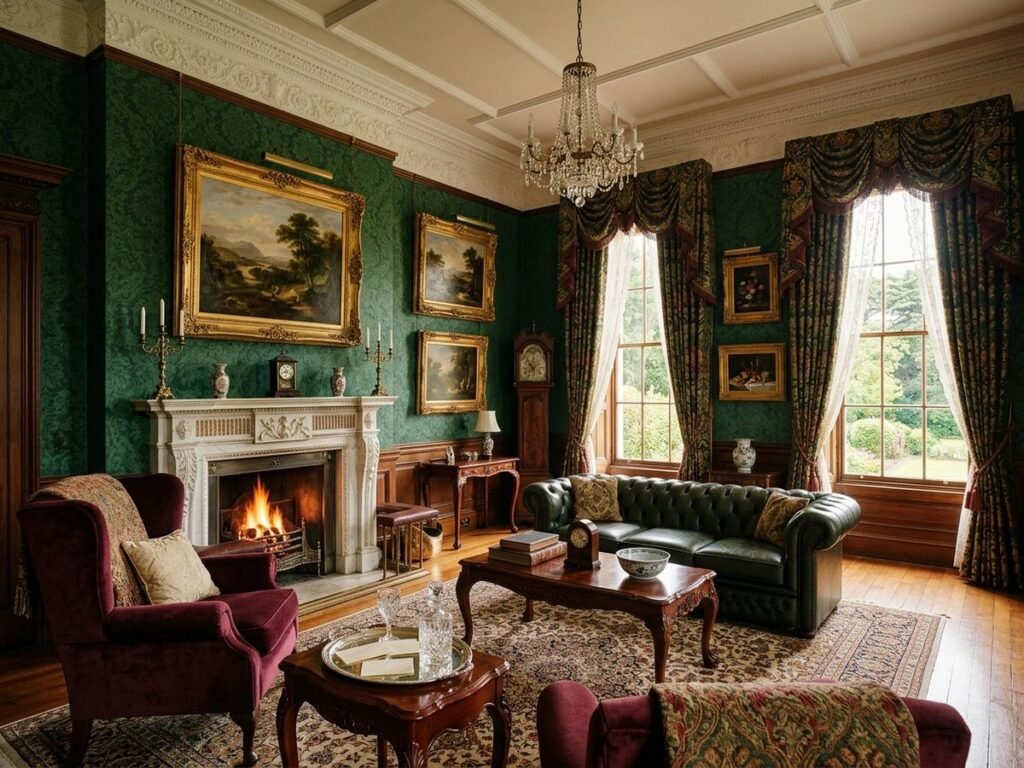
Wealthy families named for inheritance. A son carried his father’s name, his grandfather’s name, or his mother’s maiden surname as a middle name — which is why Victorian aristocracy produced so many men called things like Percival Fitzwilliam Grey. These names were chosen to look impressive in print.
| Name | Note |
|---|---|
| Augustus | Latin — majestic, deeply aspirational |
| Percival | Arthurian romance revival |
| Barnaby | Aramaic — son of consolation |
| Montague | Norman French — pointed hill |
| Algernon | Norman nickname — with moustaches |
| Cuthbert | Old English saint’s name |
| Horatio | Latin, and Nelson’s name |
| Theodore | Greek — gift of God |
| Bartholomew | Aramaic — son of the furrow |
| Rupert | Germanic — bright fame |
| Clarence | Latin — from Clare |
| Humphrey | Germanic — peaceful warrior |
| Fitzwilliam | Norman — son of William |
| Aubrey | Germanic — elf ruler |
| Marmaduke | Celtic — servant of Maedoc |
| Arabella | Latin — yielding to prayer |
| Millicent | Germanic — strong in work |
| Henrietta | Germanic — home ruler, feminine |
| Georgiana | Greek — feminine George |
| Theodora | Greek — gift of God |
| Cordelia | Celtic, and Shakespearean |
| Rosamund | Germanic — horse protection |
| Evangeline | Greek — good news |
| Seraphina | Hebrew — fiery, of the seraphim |
| Clementine | Latin — merciful |
| Hermione | Greek — messenger |
| Wilhelmina | Germanic — feminine William |
| Octavia | Latin — the eighth |
| Lavinia | Latin — of Rome |
| Honoria | Latin — honour |
Rare and Forgotten Victorian Names
These were genuinely used and have now almost entirely vanished. If you want a name that is unmistakably period-accurate and that nobody else in your campaign or manuscript will have picked, this is the section.
| Name | Meaning |
|---|---|
| Hephzibah | Hebrew — my delight is in her |
| Keziah | Hebrew — cassia tree |
| Thirza | Hebrew — pleasantness |
| Drusilla | Latin — fruitful |
| Jemima | Hebrew — dove |
| Tryphena | Greek — delicate |
| Zillah | Hebrew — shade |
| Dorcas | Greek — gazelle |
| Temperance | Virtue name — Puritan survival |
| Prudence | Virtue name — caution |
| Mercy | Virtue name |
| Patience | Virtue name |
| Honor | Virtue name |
| Verity | Virtue name — truth |
| Obadiah | Hebrew — servant of God |
| Ebenezer | Hebrew — stone of help |
| Hezekiah | Hebrew — God strengthens |
| Zachariah | Hebrew — God remembers |
| Barnabas | Aramaic — son of encouragement |
| Shadrach | Hebrew — from the Book of Daniel |
| Josiah | Hebrew — God supports |
| Jabez | Hebrew — sorrow |
| Elijah | Hebrew — my God is Yahweh |
| Enoch | Hebrew — dedicated |
| Caleb | Hebrew — faithful, whole-hearted |
| Phineas | Hebrew — oracle |
| Nathaniel | Hebrew — gift of God |
| Abiathar | Hebrew — father of abundance |
| Peregrine | Latin — traveller, pilgrim |
| Wilberforce | Surname used as a given name |
Victorian Nicknames and Diminutives
Almost nobody went by their registered name. A Victorian census and a Victorian conversation were two different things — and if you are writing dialogue, this is the list that matters more than the formal one.
| Nickname | From |
|---|---|
| Bessie | Elizabeth |
| Lizzie | Elizabeth |
| Birdie | Bertha or Roberta |
| Molly | Mary |
| Queenie | Regina, or an eldest daughter |
| Minnie | Mary or Wilhelmina |
| Nell | Eleanor or Helen |
| Nora | Honoria or Eleanor |
| Cissy | Cecilia |
| Dolly | Dorothy |
| Effie | Euphemia |
| Flossie | Florence |
| Gussie | Augusta |
| Letty | Letitia |
| Milly | Millicent or Mildred |
| Tilly | Matilda |
| Trixie | Beatrix |
| Carrie | Caroline |
| Addie | Adelaide |
| Georgie | Georgiana |
| Harry | Henry |
| Charlie | Charles |
| Fred | Frederick |
| Reggie | Reginald |
| Bertie | Albert or Herbert |
| Algy | Algernon |
| Monty | Montague |
| Teddy | Edward or Theodore |
| Sonny | Any eldest boy |
| Gus | Augustus |
Gothic Victorian Names
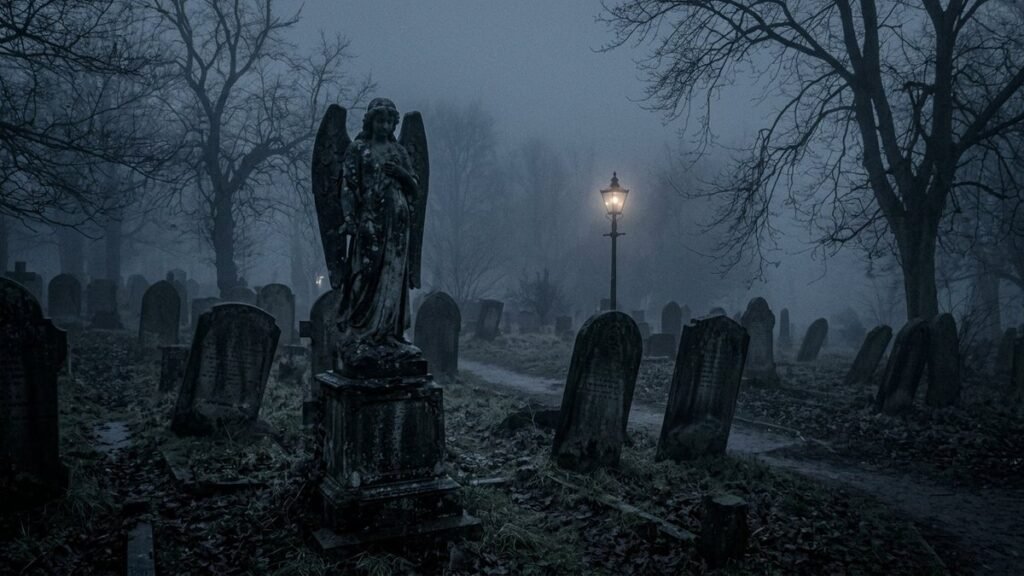
The Victorians invented most of what we now think of as gothic. Dracula was published in 1897 — late Victorian, not medieval. The séance craze, mourning jewellery made from human hair, photographs of the dead, and the whole architecture of the Victorian cemetery all belong to this period. These names carry that atmosphere while staying historically accurate.
Stoker published Dracula in 1897, and the flood of vampire names that followed is almost entirely Victorian in origin rather than Eastern European.
| Name | Note |
|---|---|
| Lucinda | Latin — of the light, used ironically |
| Celestine | Latin — heavenly |
| Ophelia | Shakespearean, popular with Victorians |
| Isolde | Arthurian tragedy |
| Rowena | Walter Scott’s Ivanhoe, 1819 |
| Lenore | Poe, 1845 |
| Morwenna | Cornish — sea wave |
| Perpetua | Latin — everlasting |
| Griselda | Germanic — grey battle maid |
| Theodosia | Greek — giving to God |
| Emmeline | Germanic — industrious |
| Hecate | Greek goddess, used in gothic fiction |
| Araminta | Invented 18th century, survived |
| Zenobia | Palmyrene queen, revived by Victorians |
| Blanche | French — white, pale |
| Mortimer | Norman French — dead sea, still water |
| Septimus | Latin — the seventh child |
| Cornelius | Latin — horn, used in gothic serials |
| Thaddeus | Aramaic — courageous heart |
| Lazarus | Hebrew — God has helped |
| Erasmus | Greek — beloved |
| Grimshaw | Surname — grim grove |
| Vane | Surname — weathervane, the changeable one |
| Mallory | Surname — the unlucky one |
| Thorne | Surname — thorn bush |
| Crowley | Surname — crow clearing |
| Marlowe | Surname — remains of a lake |
| Sable | French — black |
| Jerusha | Hebrew — possession |
| Absalom | Hebrew — father of peace |
The séance boom of the 1850s onward is also where most English ghost names come from — the Victorians built the vocabulary we still use.
Victorian Names from Literature
The Victorians read voraciously, and names moved from novels into registers within a few years. Dickens alone put dozens of names into circulation. These are all drawn from books published during the period, which makes them period-accurate in a way invented names never are.
| Name | Source |
|---|---|
| Estella | Great Expectations, Dickens, 1861 |
| Pip | Great Expectations |
| Dorrit | Little Dorrit, 1857 |
| Nicholas | Nicholas Nickleby, 1839 |
| Oliver | Oliver Twist, 1838 |
| Fagin | Oliver Twist — surname |
| Copperfield | David Copperfield, 1850 |
| Micawber | David Copperfield — surname |
| Havisham | Great Expectations — surname |
| Scrooge | A Christmas Carol, 1843 |
| Marley | A Christmas Carol — surname |
| Eyre | Jane Eyre, Brontë, 1847 — surname |
| Rochester | Jane Eyre — surname |
| Heathcliff | Wuthering Heights, 1847 |
| Catherine | Wuthering Heights |
| Linton | Wuthering Heights — surname |
| Dorothea | Middlemarch, Eliot, 1871 |
| Casaubon | Middlemarch — surname |
| Silas | Silas Marner, Eliot, 1861 |
| Tess | Tess of the d’Urbervilles, Hardy, 1891 |
| Bathsheba | Far from the Madding Crowd, 1874 |
| Gabriel | Far from the Madding Crowd |
| Eustacia | The Return of the Native, 1878 |
| Sherlock | A Study in Scarlet, Doyle, 1887 |
| Mycroft | Sherlock Holmes stories |
| Watson | Sherlock Holmes — surname |
| Mina | Dracula, Stoker, 1897 |
| Jonathan | Dracula |
| Lucy | Dracula |
| Dorian | The Picture of Dorian Gray, Wilde, 1890 |
Conclusion
The difference between a name that is genuinely Victorian and one that merely sounds old usually comes down to two questions: which decade, and which class.
Get the decade right and your 1840s character is not walking around called Gladys. Get the class right and your dock worker is Bill rather than Algernon. Everything else — the meanings, the surnames, the nicknames — follows from those two decisions.
If you want a quick answer rather than a careful one, the Victorian name generator at the top of this page handles both. Set the period, set the class, and it will give you something a registrar would have recognised.
Frequently Asked Questions
What are Victorian names?
Names in common use in Britain during Queen Victoria’s reign, 1837 to 1901. The most common were William, John, George and Thomas for boys, and Mary, Elizabeth, Sarah and Ann for girls. Because the era spans sixty-four years, names that feel distinctly “Victorian” to us — Ethel, Mabel, Gladys, Percy — are actually late-Victorian and barely appear before 1870.
Was Victoria a popular Victorian name?
No, and this surprises people. In 1844 English birth registers, over 63,000 girls were named Nancy while only 148 were named Victoria. The Queen’s name was considered too elevated for ordinary families. Albert, by contrast, rose sharply after the royal wedding in 1840 and stayed common for decades.
What are good Victorian male names?
For a safe, period-accurate choice: William, John, George, Thomas, Henry, Charles, Albert, Arthur, Frederick or Edward. For something less common but still genuine: Ernest, Herbert, Percy, Cecil, Horace, Ambrose or Wilfred. If you want distinctly upper-class, try Augustus, Percival, Montague or Algernon.
Are Victorian names the same as 1800s American names?
No, and most name lists online get this wrong. Many “Victorian” lists are built from US Social Security data, which is why they include Minnie, Bertha, Ida, Myrtle, Elmer and Earl. Those are American. British registers from the same decades look different — Florence, Edith, Ethel, Agnes, Ellen and Harriet. Victorian means British, because Victoria was Queen of Britain.
How did social class affect Victorian names?
Considerably. Working families chose short, plain names that got shortened immediately — Bill, Tom, Nellie, Polly. Middle-class families chose “improving” names that read well on a calling card — Arthur, Herbert, Ernest, Constance, Beatrice. Upper-class families recycled family names and often used the mother’s maiden surname as a middle name.
Why were flower names so popular in the Victorian era?
Daisy, Lily, Violet, Rose and Ivy spread rapidly from the 1880s, especially in working-class households. Part of it was the Victorian language of flowers, but the practical reason was simpler: flower names carried no family obligation. You did not have to name a daughter after a grandmother or a wealthy aunt.